Hanging a photo at home: LabKorner's tips for a gallery-quality look
18/05/2026
Your photos deserve a display worthy of your most beautiful memories
You chose your image, selected your finish, and eagerly waited for your print to arrive. Yet once it’s on the wall, something feels off. Most of the time, the issue is not the photo itself: it’s the way it’s displayed. Choosing the right hanging height, identifying the room that best suits the artwork’s format, and using lighting that enhances its finish make all the difference.
Tip #1: Choose the right hanging height
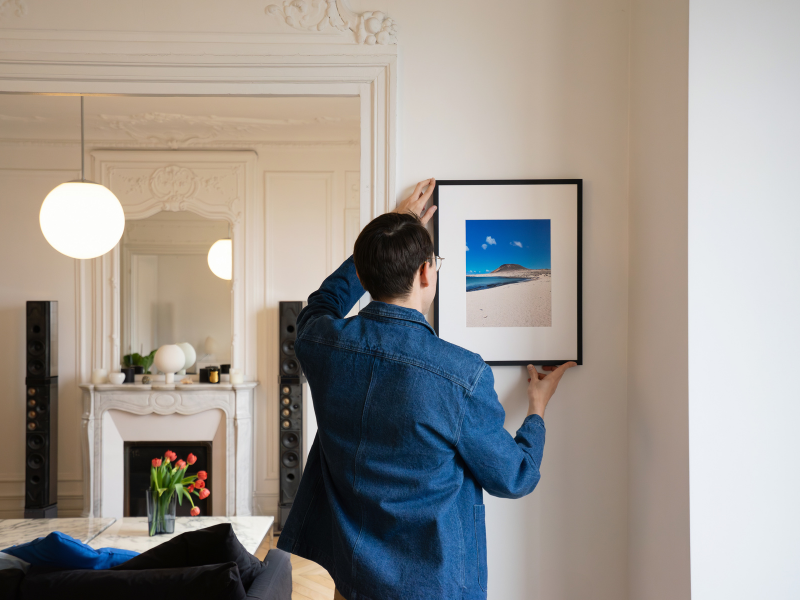
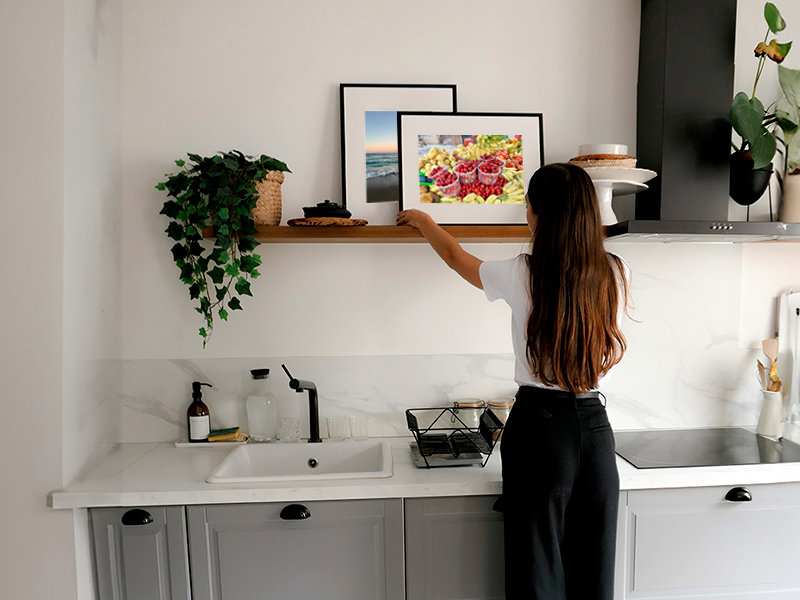
We often try to fill the wall and occupy the space, which leads to hanging the photo above eye level. To truly enjoy an image and create a natural connection with its subject, avoid having to look up. The rule used by galleries and museums is simple: the center of the artwork should be positioned approximately 145 to 165 cm from the floor, at eye level. This measurement also applies to compositions made up of several prints, use the visual center of your gallery wall as your reference point. If you place your photo above a piece of furniture, such as a sofa, leave at least 20 to 25 cm above the backrest.
Tip #2: Choose the right format for your space
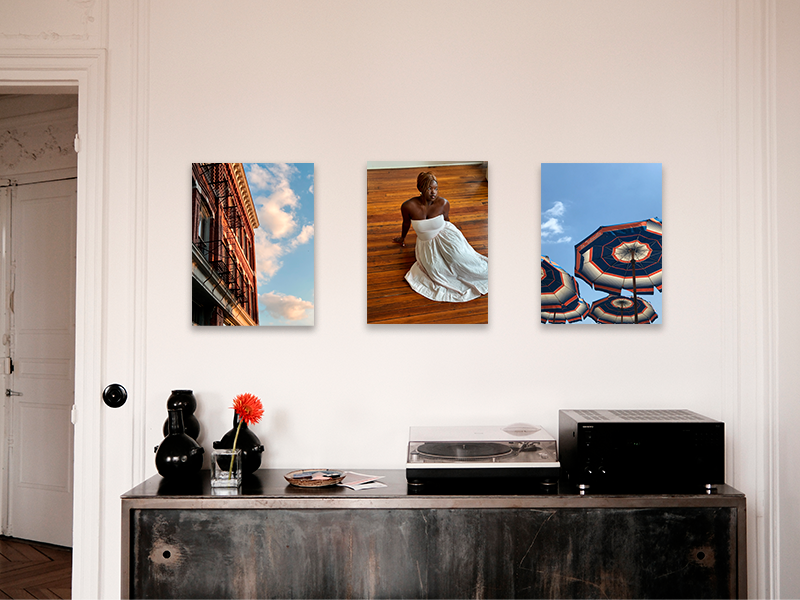
A print that is too small on a large wall disappears without interacting with the space. It’s one of the most expensive mistakes because it often leads to purchasing a larger format later. Before ordering your personalized LabKorner print, measure your wall and apply this simple rule: the width of the print (or composition) should represent between 57% and 75% of the width of the furniture or wall surface beneath it. For a bare 2-meter wall, a Large or Giant format will be perfectly suited. For truly generous spaces, the Collector print transforms your photo into a true work of art, made even more impactful with a shadow-gap frame, the preferred finish used by professional galleries.
Tip #3: Make the most of lighting
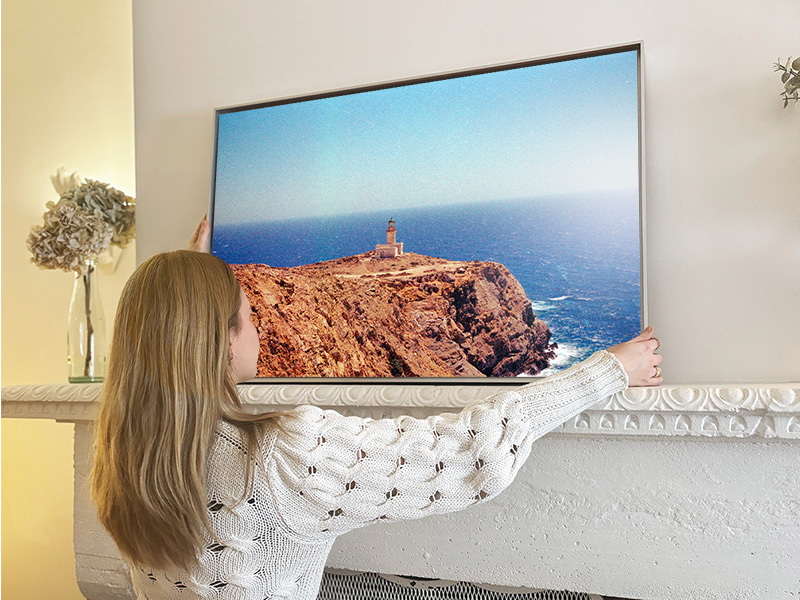
Lighting is the best ally of a successful display, as it directly interacts with the chosen finish. A glossy acrylic glass print captures and amplifies light, making it ideal for a room with directional lighting, such as a spotlight or wall sconce. In a room flooded with natural light, reflections can become distracting, so opt for a matte finish or a glare-free Fine Art print.
Tip #4: Create an artist-style gallery wall
Interior design magazines and social media offer endless inspiration for creating a gallery wall. The exercise is more difficult than it seems… Accumulating frames without visual logic can quickly create a cluttered effect. A wall composition should be built like a layout: it needs an axis, rhythm, and a center of gravity. Two approaches can guide you. The first: align the center of your artworks along the same imaginary horizontal line, so the formats may vary while the eye remains naturally guided. The second: choose a statement piece, a large-format print, and build around it while leaving generous spacing between your images (15 to 20 cm). To test your composition before drilling holes, cut paper templates matching the exact dimensions of your prints and tape them to the wall using masking tape. This is the method used by professional art installers.
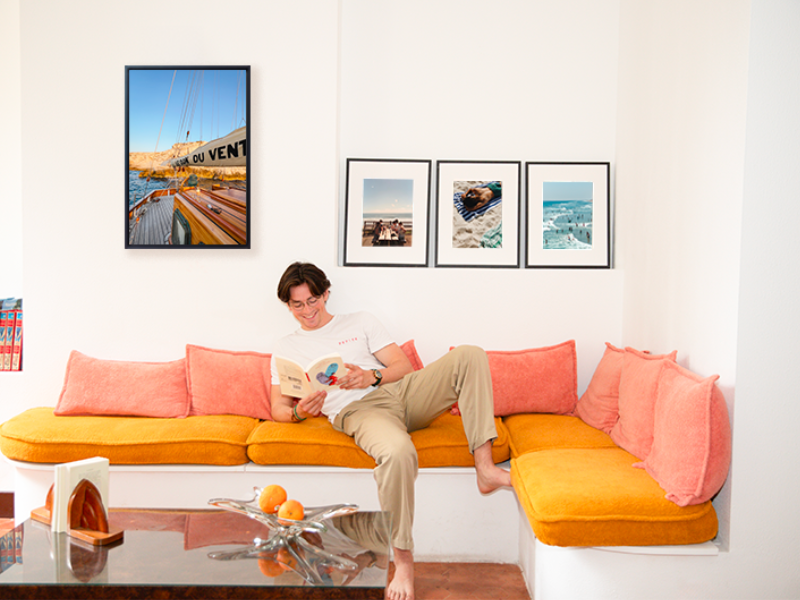
Tip #5: Choose the right photo frame
The frame is not just a detail: it creates the connection between the image and your interior decor. A brushed aluminum frame naturally fits into a contemporary or industrial interior. An oak or walnut wooden frame brings warmth and authenticity to a more classic space. Our gallery framed prints offer a wide choice of framing options, while our largest formats can feature a floating frame. Slightly offset from the wall, the print appears to float 15 mm within its frame, creating an elegant sense of lightness.
And for a clean, frameless display, the aluminum-mounted Etalbond® print hangs directly on the wall, like a window opening onto your image and your best memories.
Key takeaways:
- The center of a displayed print should be positioned 145–165 cm from the floor, and at least 20–25 cm above a piece of furniture or sofa.
- The width of the print should represent between 57% and 75% of the wall surface it occupies.
- The chosen finish interacts with ambient light: glossy acrylic glass works best with directional lighting, while LabKorner Fine Art or matte prints are ideal in rooms with strong natural light.
- A successful gallery wall is organized around a horizontal axis or a statement piece. Always test the composition with templates before drilling.
- Your choice of photo frame should complement the room’s style: aluminum for contemporary interiors, wood for classic spaces, floating frames for a gallery effect, and mounted prints for a minimalist look.
© 2026, Justine Grosset for LabKorner